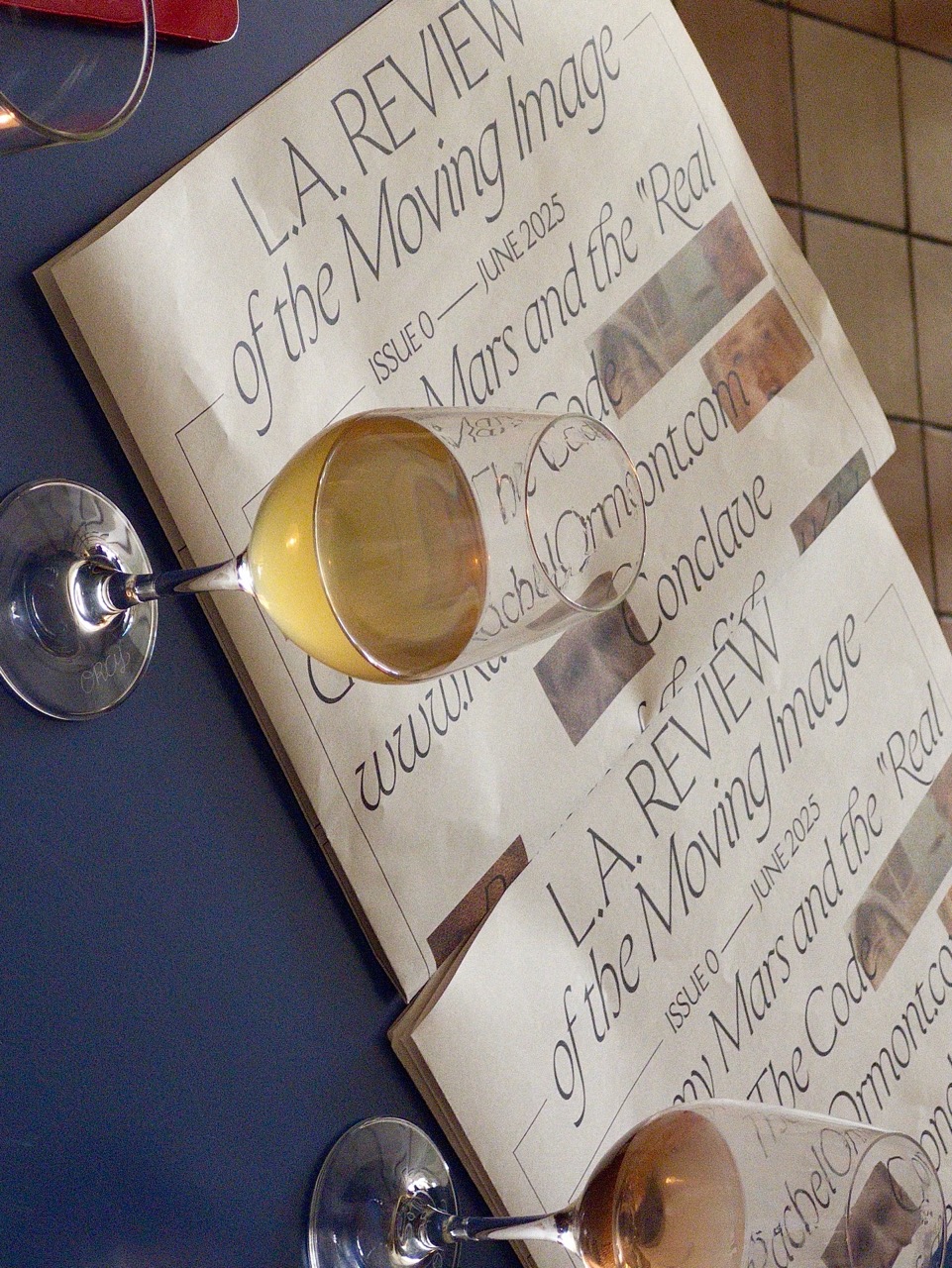
Over the past decade, the geography of creative life in Los Angeles has shifted. New art galleries, museums, black box theaters, independent bookstores, pop-ups, and other venues have rapidly emerged. However, L.A.’s spirit in film and filmmaking has not diminished—it’s simply dispersed. The gravitational center of film culture has moved eastward and beyond.
In a city long shaped by the studio system and premiere theaters, moving-image culture now emanates through artist-run cinemas, living room screenings, rooftops, garages, cemeteries, bridge walls, guerrilla file shares, Twitch streams, and group chats. Its social infrastructure is less centralized, more fugitive—yet still astonishingly coherent.
If L.A. once told its story through the mythmaking machine of Hollywood, it now finds resonance in the small, shared rituals of watching and rewatching, editing and sharing, gathering and reacting. It finds identity in the everyday ways moving images continue to organize desire, community, memory, and struggle.
To track the moving image in L.A. today is not to follow red carpets or release calendars. It is to trace how we gather around shared screens: how narrative cohesion is circulated, recut, remixed, and recoded into new forms. The moving image is not only what Los Angeles produces—it’s how it dreams, how it argues, how it remembers.
L.A. Review of the Moving Image is dedicated to this inquiry. We approach the moving image—whether film, video, projection, stream, or clip—not simply as content, but as encounter. Our interest is not only in what appears onscreen, but in where it’s shown, how it’s talked about, and how it reshapes the people and publics around it.
Interlude 0 - Winter 2025 (Sold Out) ↴
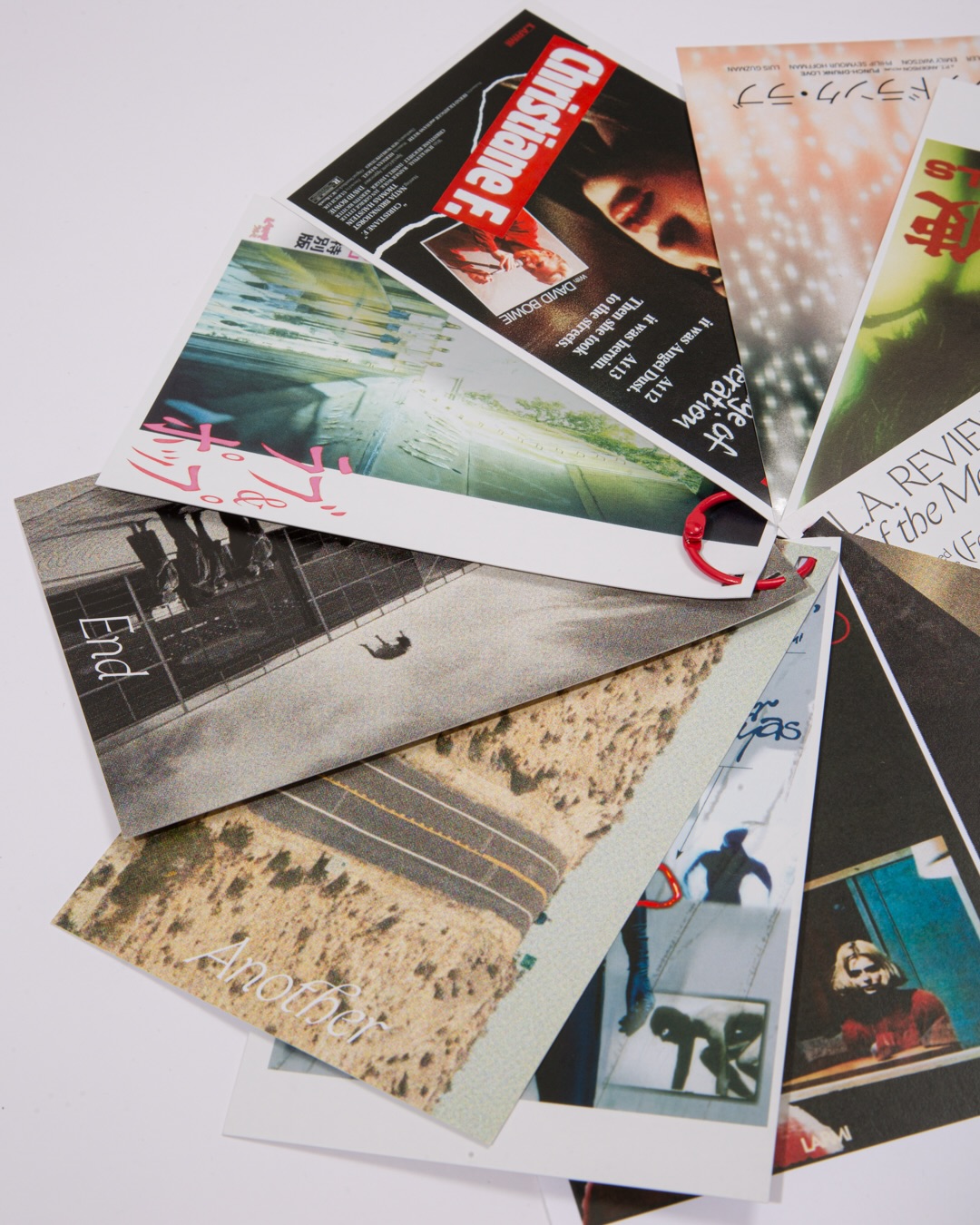
Issue 0 - Summer 2025 (Sold Out) ↴